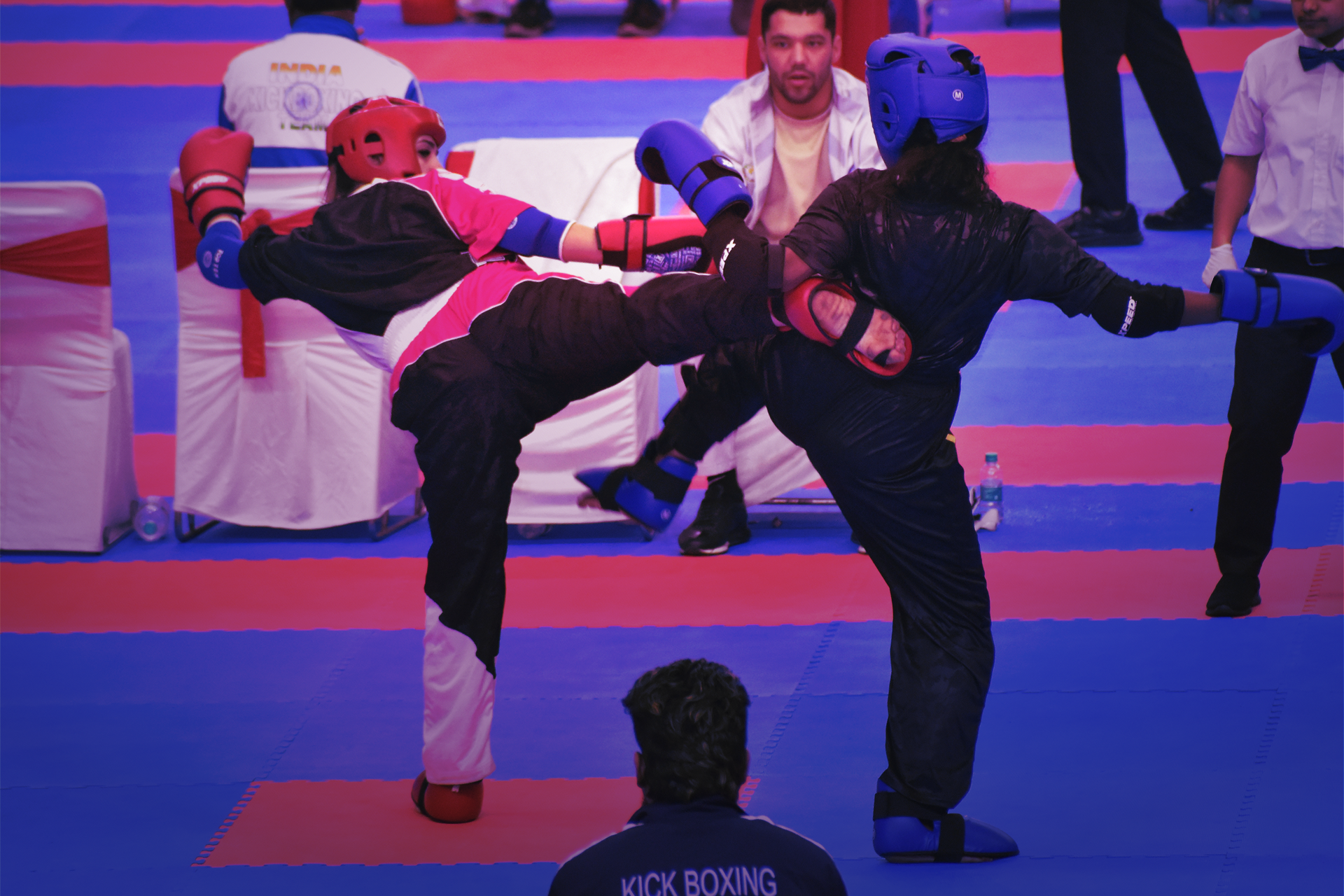
India is not short of sporting enthusiasm.
It is short of sporting institutions.

We have passion in abundance. Talent in every district. Discipline in our forces, schools, and academies. What we lack is a reliable, professional structure that converts participation into progress — and progress into pride.

Most sports initiatives in India start with energy and end with exhaustion. They chase attention before they earn trust. They focus on events instead of ecosystems.

That is not how lasting leagues are built.

When we looked at kickboxing in India, the insight was clear:
this is already a national sport in behaviour, but not yet a national sport in structure.

Over two lakh registered athletes. Presence across universities, schools, police forces, armed forces, and state boards. Strong female participation. International alignment. Yet no single platform that connects all of this into one visible, aspirational, professional pathway.

That gap is not accidental — it is systemic.

India has reached a point where sport can no longer be treated as an occasional spectacle. It must be treated as infrastructure. Just like highways, digital networks, or manufacturing corridors, sports ecosystems need planning, timelines, governance, and long-term thinking.

Kickboxing Super League is being built with that mindset.

We are not positioning this as “another tournament”.
We are building a fighter dynasty framework — where athletes are not tied to cities, but to legacies. Where teams are built around identity, discipline, and philosophy, not geography alone. Where fans don’t just support winners, they follow journeys.

This distinction matters.

City-based formats work well in certain sports. But combat sports have always thrived on lineage — trainers, styles, schools, and rivalries that transcend pin codes. KSL embraces this truth instead of forcing a borrowed model.

From day one, the focus has been on execution discipline.

A defined season window. Clear athlete categories. Structured auctions. Medical and safety protocols that match international expectations. Transparent officiating. Content pipelines that run before, during, and after the season — not just on match days.

We are designing the league to operate for 15 days, but to live for 365.

That is how modern sports brands are built.

Equally important is inclusivity. Combat sports in India have quietly done what many mainstream sports are still struggling with — normalising women’s participation at scale. KSL does not treat women’s fights as a side event. They are integral to the league’s identity, visibility, and future.

This is not a CSR angle.
It is a performance and culture angle.

When young athletes — men and women — see a professional platform that respects their effort, protects their health, and rewards their discipline, sport stops being a gamble. It becomes a career option.

And when families, institutions, and sponsors see structure, sport stops being risky. It becomes investable.

From a leadership standpoint, my role is simple but demanding:
ensure that ambition never outruns capability.

Growth must be earned, not announced. Credibility must be built, not claimed. And systems must always be ready for the next level before the next level arrives.

India does not need more short-lived leagues.
It needs fewer, stronger ones.

If KSL succeeds, it won’t be because of one season, one celebrity, or one broadcast deal. It will be because the fundamentals were respected from the start.

Sport, at its best, reflects a nation’s discipline, fairness, and resilience.

Our goal is not just to host fights.
Our goal is to build a sporting institution India can stand behind — today, and a decade from now.