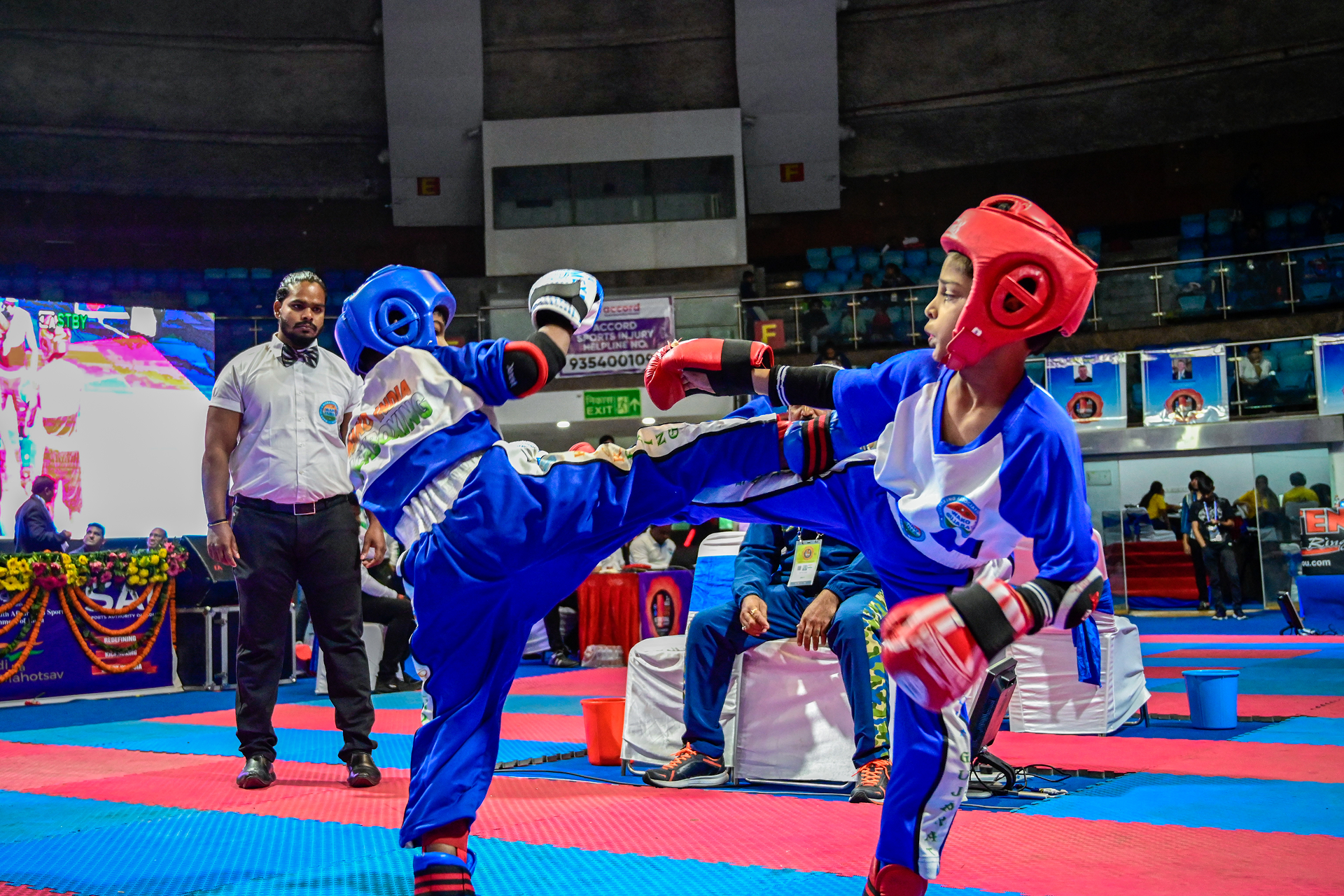
For decades, India has been described as a “cricket-first” nation. That narrative is no longer accurate.

Over the last ten years, the country has witnessed a quiet but powerful shift — a broad-based acceptance of non-cricket sports as legitimate entertainment, career pathways, and commercial properties. Kabaddi, football, wrestling, boxing, and mixed combat formats have all found space in the mainstream.

Kickboxing is the next natural step in this evolution.

The question is not whether India is ready for a professional kickboxing league.
The question is why it has taken this long.

A Deep, Underrepresented Talent Base

India today has one of the largest grassroots kickboxing ecosystems in Asia.

With over two lakh registered players, representation across 32 state associations, participation from universities, schools, armed forces units, police forces, and public institutions, and increasing female participation, the sport has moved far beyond niche gym culture.

What has been missing is not talent — but structure.

Most kickboxing careers in India currently peak at national or international championships with limited continuity, income stability, or public visibility. Athletes compete intensely for short windows and then return to obscurity.

A professional league changes this equation.

It creates:
	•	Year-round engagement
	•	Contractual stability
	•	Media visibility
	•	Aspirational value for younger athletes

In short, it converts participation into profession.

The Post-Fitness Boom Effect

India’s fitness economy has expanded dramatically since 2018.

Combat training is no longer seen purely as competitive sport. It has become a lifestyle choice — driven by fitness culture, self-defence awareness, discipline, and mental resilience. Kickboxing gyms, MMA academies, and functional training centres are now present across metros and Tier-2 cities.

This matters because professional leagues thrive when viewers understand the sport instinctively.

Kickboxing is visually intuitive.
It requires no complex rule learning.
It delivers instant emotional payoff.

That makes it uniquely suited to today’s short-attention, high-intensity consumption habits.

Proven League Economics in India

India is no longer experimenting with league formats. It has validated them.

Kabaddi, football, badminton, and wrestling leagues have demonstrated that:
	•	Franchise models work beyond cricket
	•	Regional and cultural identities drive loyalty
	•	Non-metro audiences are deeply engaged
	•	Advertisers are willing to invest when storytelling is strong

Kickboxing fits directly into this proven economic framework, with one critical advantage — global relevance.

Unlike some indigenous sports, kickboxing already enjoys international recognition, standardised formats, and cross-border athlete mobility. This opens doors to:
	•	International fighters and coaches
	•	Global broadcast interest
	•	Overseas fan bases and diaspora engagement

Few emerging sports in India have this dual domestic-global appeal.

A Changing Audience Mindset

Indian sports audiences are no longer passive.

They want:
	•	Behind-the-scenes access
	•	Athlete stories
	•	Authentic emotion
	•	Digital participation

They are comfortable with multiple sports coexisting. They follow fighters on social media, consume international combat content online, and engage deeply with personal journeys.

Kickboxing aligns naturally with this mindset because it is individual-driven yet team-enhanced — allowing both personal narratives and collective rivalries to coexist.

This balance is critical for sustained engagement.

Institutional Alignment and Safety Evolution

Another key factor driving readiness is the maturing governance and safety framework around contact sports.

Modern kickboxing events now operate with:
	•	Clear weight categories
	•	Medical protocols
	•	Insurance frameworks
	•	Professional officiating standards

This has helped address long-standing concerns around safety and legitimacy, making the sport more acceptable to families, institutions, sponsors, and public bodies.

As perception shifts from “dangerous” to “disciplined,” scale becomes possible.

The Timing Is Strategic

Every successful league emerges at the intersection of talent depth, audience readiness, and economic confidence.

India is currently at that intersection.
	•	Athletes are ready for professional platforms
	•	Audiences are open to new sports narratives
	•	Brands are seeking youth-driven, high-engagement properties
	•	Digital infrastructure allows cost-efficient national reach

Waiting longer would not reduce risk — it would only delay momentum.

Beyond Entertainment

A professional kickboxing league is not just an entertainment property.

It is:
	•	A career pathway for athletes
	•	A fitness and discipline role model for youth
	•	A cultural expression of resilience and grit
	•	A platform for inclusion across gender, region, and background

In a country where millions seek structured avenues to channel physical talent, kickboxing offers both identity and opportunity.

India’s readiness for a professional kickboxing league is not speculative.
It is evident.

The talent exists.
The audience exists.
The economic model is proven.
The cultural moment is right.

What has been missing is a league that connects all these elements with clarity, credibility, and consistency.

That gap is now ready to be filled.